
What is Drylining?
Drylining is the quick and efficient process of attaching plasterboards to a frame or existing area to create internal walls, partitions or ceilings within a building. It replaces the need for traditional plastering and as it is much faster, can save a lot of time and money. It can even be used to help with sound proofing or to create space for insulation. The other benefits of using drylining include; covering uneven surfaces, creating partitions in existing rooms and covering over awkward shaped areas.
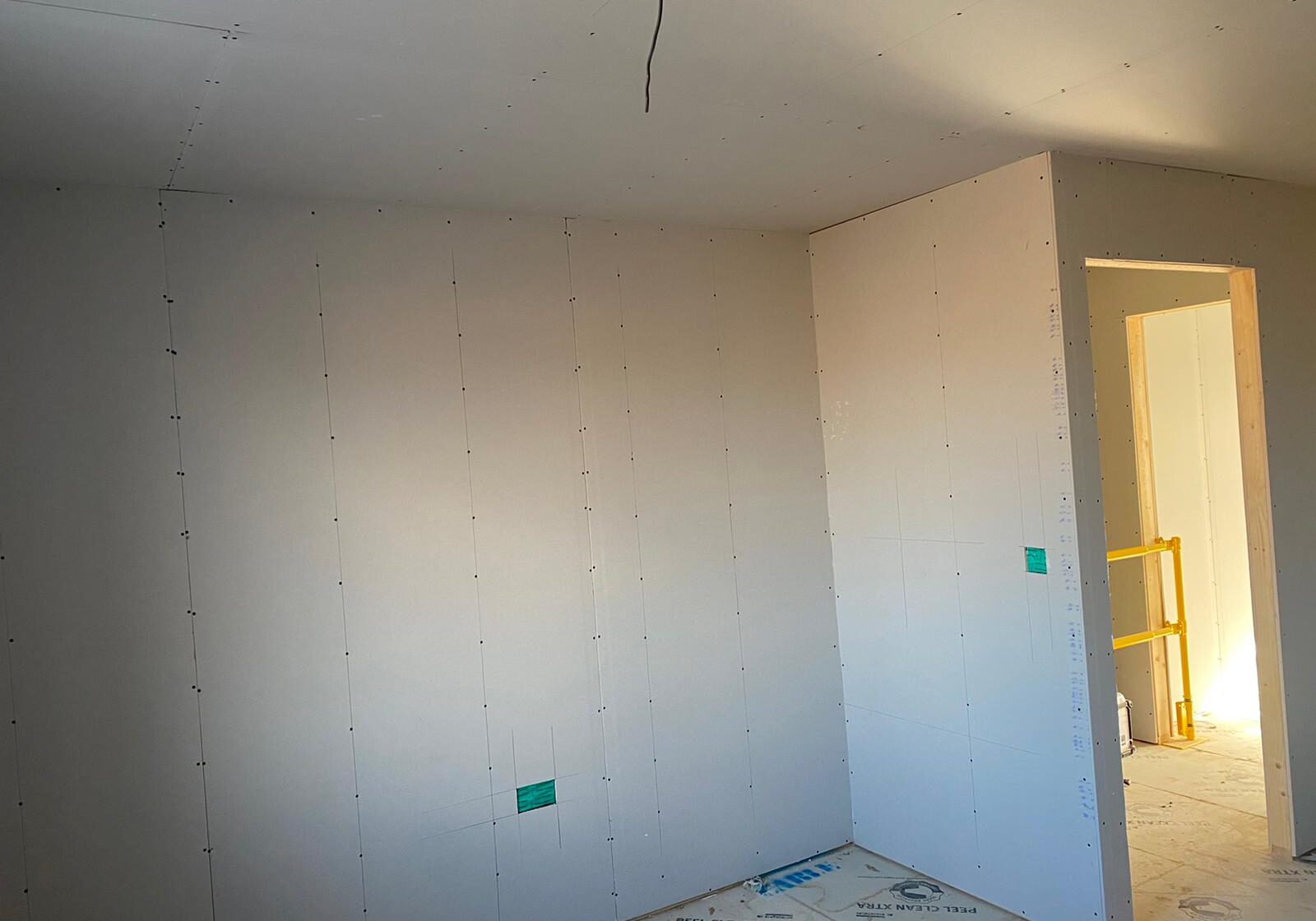
Install on Traditional Stud Timber Frame
Starting with a timber frame the plasterboards are attached to the timber studs using dry wall screws.
All materials used as per the architects specification
This is the only method used.
Traditional Dot and Dab installation
A dot and dab wall is where plasterboard is attached to a solid brick or block inner skin of a cavity wall (or in certain cases a solid wall) by the use of dabs of adhesive.
This creates a small gap between the plasterboard and the supporting wall for all fixed services


Install on Metal Frame Ceilings
This system allows for some degree of loading and is one of the more traditional forms for ceilings. Once the lightweight metal frame is in place, the plasterboards are attached to the primary channels, perimeter channels and the actual MF ceiling channels.
This system allows for provision above the ceiling. It is predominantly used in blocks of flats and commercial buildings.